Week of October 19–25, 2026: Rivers, rides and a friendlier home screen
· Week of October 19–25, 2026
A fair warning: everything after this paragraph is a hopscotch of the week's events, skipping from rivers to tablets to e-bikes and back again. That's how it goes when an ecologically minded teacher and cyclist builds tools to make some jobs easier and life more fun: it comes out as a hodgepodge. If you're more serious-minded and want just the facts, head straight to gethabitatlens.app. That said, read on at your own risk.
Here's this week's route: the HabitatLens field apps first (rivers, weather, new gear and a hike), then a stop in the classroom, then onto the bike, and finally the everyday tools.
The HabitatLens suite
A new headline. The home page now says "Anyone can be a field scientist." (in Spanish, "Cualquiera puede ser científico de campo."). It sums up why I build these apps, and the same line now opens the draft app store listings for HabitatLens, FaunaLens and SongLens.
HabitatLens learns to read a river
The big addition this week is Stream health. You sample the small animals living in a stream (insect larvae, snails, worms) and HabitatLens turns what you found into a health score for that stretch of river.
- Simple mode follows a citizen-science method made for volunteers and students, so you don't need to identify every family under a microscope. It works on the phone, in Desktop and in the web edition.
- River history tracks a site over time, including how many mayflies, stoneflies and caddisflies you found (they only thrive in clean water) and how varied the community is.
If your main interest is stream health and you work in the Chocó region, the free Ríos Chocó app from CONDESAN and its partners is available to download for iPhone and Android.
Weather for past counts, and maps that work offline
- Weather history. Do you have old species inventory data that you collected long ago? Add the weather to any count, for any place on Earth, back to 1981. The data comes free from NASA. Each record attributes its source.
- Open imagery. Offline maps and PDF reports can now use free satellite mosaics (Sentinel-2) and US aerial photos (USGS NAIP), so a map you download at home still works where there's no signal.
HabitatLens Desktop 0.1.19 and 0.1.20
- 0.1.19 brought Stream health, export to eBird, clearer permission requests, and a web edition that runs in a browser. That last one is for Chromebooks, which is what our first beta tester uses for data management.
- 0.1.20 made the download smaller, brought the advanced features to older Intel Macs, and added a Chromebook (Linux) package.
A simpler home screen on the phone
The HabitatLens phone app now opens to four tabs: Modules, Data, Guide and Settings. The built-in users' guide explains the new layout in English and Spanish.
The guides also gained a tip I wish I'd written sooner: the Standard Habitat Evaluation template that comes with the site characterization module deliberately includes almost every possible variable I could think of, and most studies need fewer. You can make a copy (Characterization → Templates → Make a copy) and remove what you don't need.
FaunaLens and SongLens
- The FaunaLens manual now covers underwater camera stations, night mode and the hourly battery log, in English and Spanish.
- A small but important tip in the manual: don't lock the phone after you set it up as a camera trap in the field, or remote control functions will be disabled.
New gear: solar power, quick mounts and a field tablet
- Solar power for long deployments. A Voltaic Systems 10-watt solar panel and V50 power bank arrived this week. The goal is to keep FaunaLens and SongLens phones running on long deployments without anyone hiking out to swap batteries. Over the coming weeks I'll put it through its paces, and the apps' hourly battery log will show exactly how well it keeps up.
- Quick mounts for casual users. Not everyone has a camera-trap housing and a cordless drill, so I'm testing simple ways to put a phone up and take it down in a minute, with no tools. The first setup: a tree strap with hooks, plus a JOBY GripTight PRO 2 GorillaPod, whose bendable legs wrap around trunks, branches and posts of almost any shape.
- A tablet made for the field. HabitatLens is also being tested on a TRIPLTEK X PRO, a rugged Android tablet built for outdoor work.
- A case for gear that isn't weatherproof. A Pelican 1120 case also arrived, to protect and secure equipment that isn't already weatherproof when it's left out in the field.
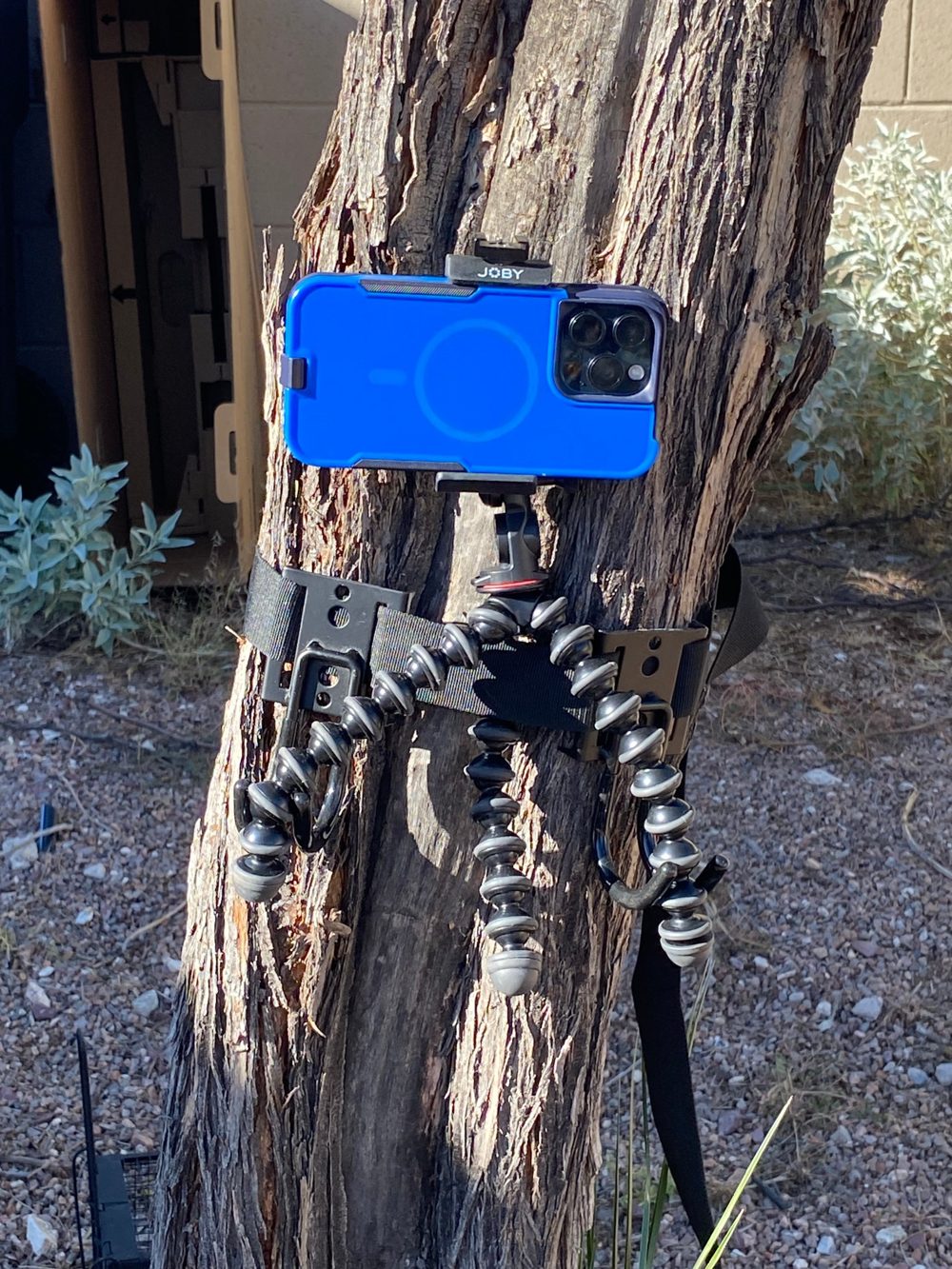
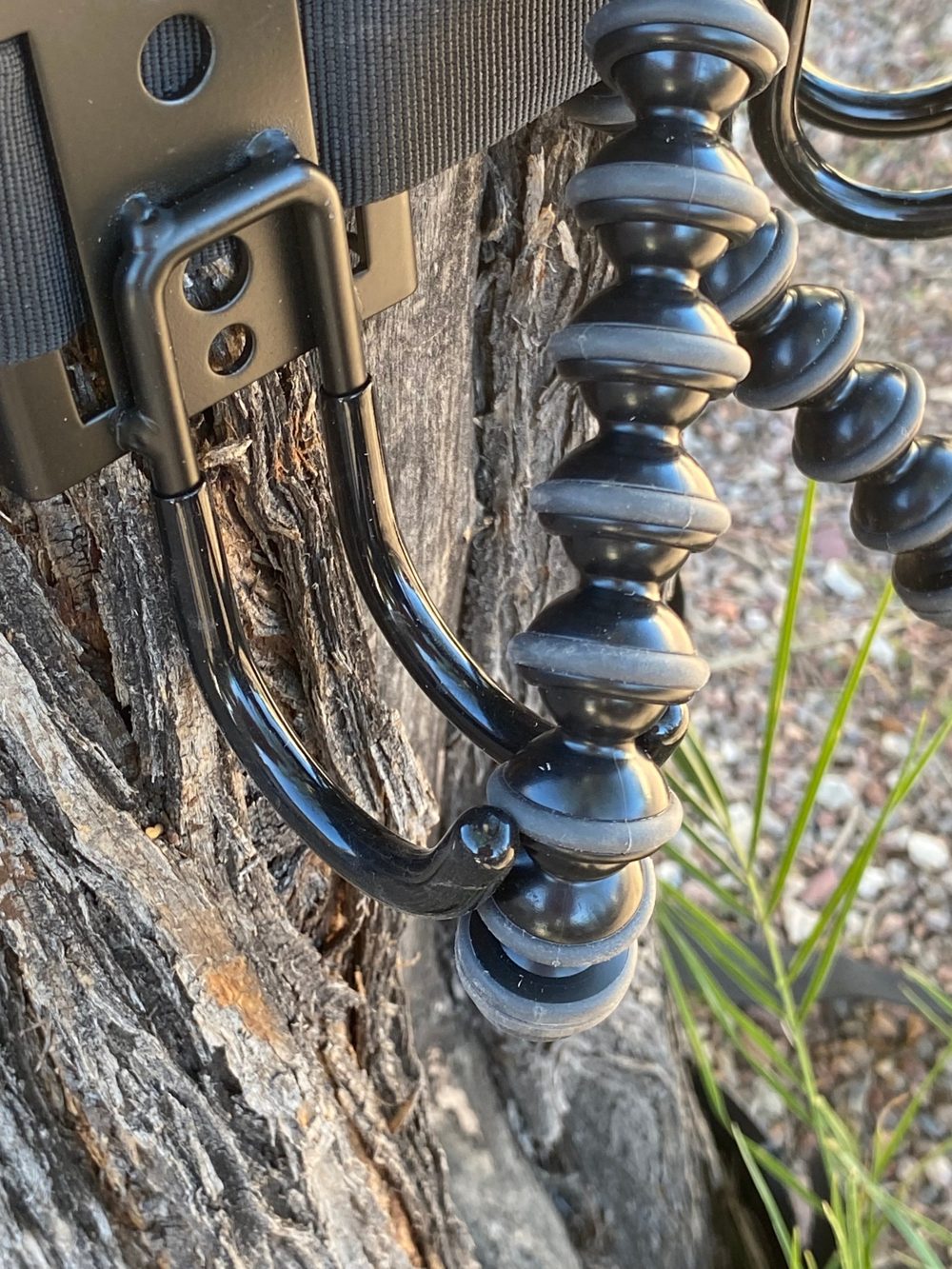
Field testing: a late-start hike
I also set up test copies of HabitatLens, FaunaLens and SongLens that install straight onto a phone for field days, so trying a fix on the trail no longer waits on the app store.
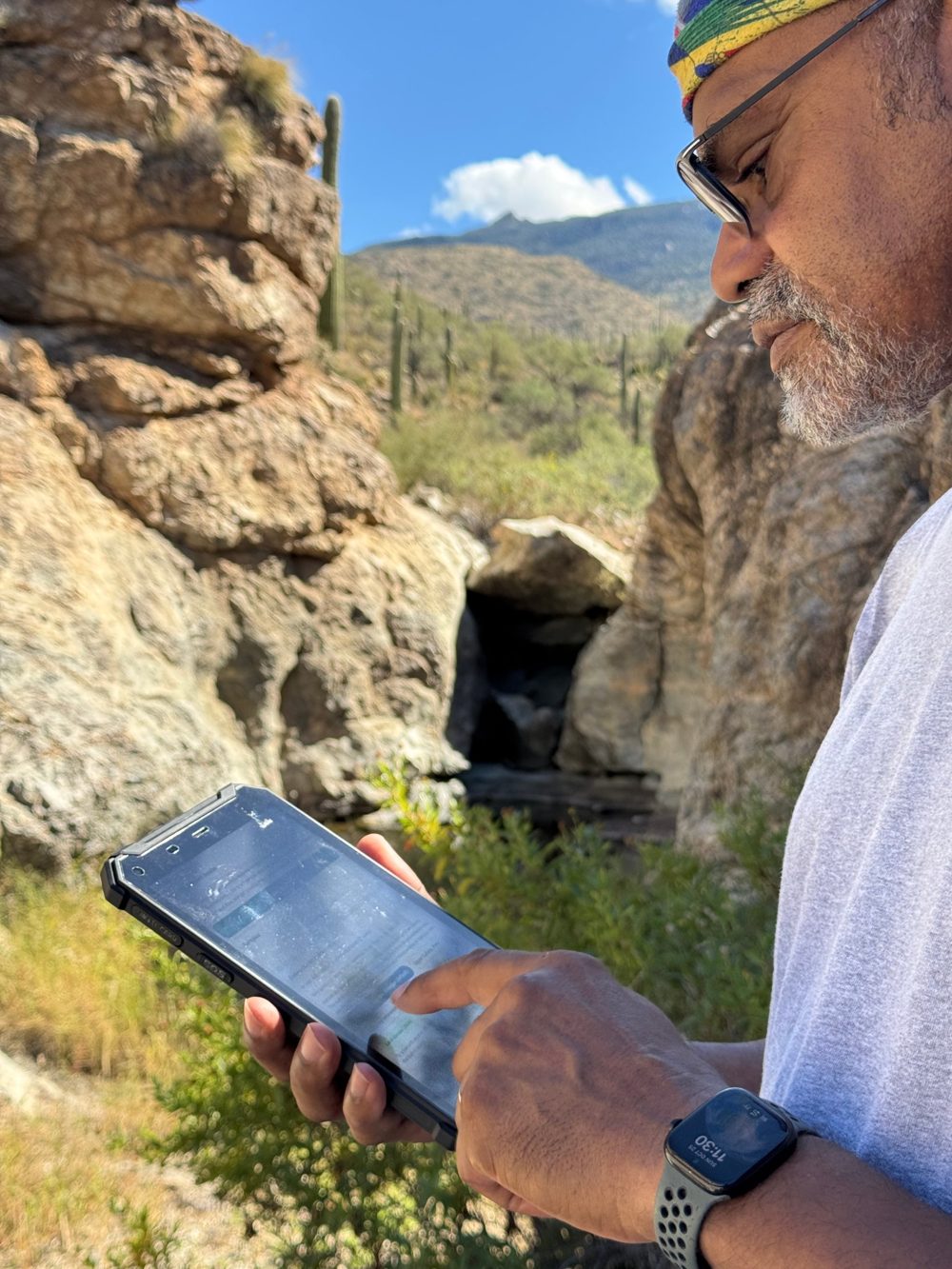
Those test copies, and the new tablet, got their first outing on Sunday, on a hike to Garwood Dam in Saguaro National Park East. We started very late, so we only managed a small part of the testing and photography I had planned. The photos show the Behavior module running on the TRIPLTEK X PRO, logging bird behaviors such as foraging, perching and singing with a single tap each. The trail will get a second, earlier visit.

For teachers
- Stream health's Simple mode is the piece I'm most excited about. A class can sample a creek, score it, and come back next season to see what changed, without anyone needing to be a taxonomist.
- Gorilla, the AP Environmental Science planner, now has a native Mac app and an Android version.
For cyclists
Bike Power (new). The first of a planned suite of apps for cyclists, it's an app for e-bike riders: how much battery a ride will take given the hills and today's wind, how much effort your legs put into the ride, when to leave to get home before dark, a live ride map, and range at each assist level. It also works for regular bikes, with power and calories worked out from the physics. Version 0.4 runs on iPhone and Apple Watch, and the first Android build arrived on Saturday.
The first real ride
On Friday, Bike Power came along on my commute to school. Real roads find problems a desk never will, and that ride turned up a handful:
- The map can now turn with you as you ride. The part you've already ridden shows as a solid line and the route still ahead as a dashed one.
- The battery estimate got a calibration fix, and the rider settings and Apple Health link work properly now.
Tools for daily life
- ChargeMinder, the app that ensures you never leave home with a device that will give up the ghost while you're out, got native iPhone, Apple Watch and Android apps with four tabs (Today, Devices, Schedule, Settings), plus charging windows, so reminders arrive when you can actually plug in.
- Many Hands divides the routine work within a group fairly, and can now import a chore list from a spreadsheet or pasted lines, and understands chores you only do "when needed". There's now a Mac version, too.
- Clepsydra, the desk companion that is a work-time tracker and personal trainer, now has eye rests, a built-in manual in English and Spanish, and the first steps toward Windows and Linux versions.
- Carryall, a tool for freelancers, got its first real code.
Testers and partners
This week I invited more researchers to try HabitatLens, including river and mountain ecologists at a university in Quito. Our first beta tester, the Ecuadorean NGO that joined last week, works on Chromebooks, so the new web edition and Chromebook package were built with them in mind.
The apps now share a single thank-you list, so everyone who has helped shape HabitatLens and its companions is credited in every one of them. You just might be one of them!
If you teach, do field work, or run a community monitoring group and would like to test, I'd love to hear from you.
Coming up next
- Controlling FaunaLens from afar. The groundwork is in place for sending a few safe commands to a camera trap in the field, with firm limits and a log of every command. It's in testing, not in the app yet.
- A week of Bike Power. It gets a full week of commutes. If it holds up, it becomes my everyday ride app, and ChargeMinder goes back to doing one thing well: reminding you to charge.
- Kichwa. The new crash-report step has first drafts in Ecuadorian Kichwa, waiting for review.
Ten percent of our profits always go to a small-grants fund for community conservation.
Thanks for reading. See you next week.